Country Stories
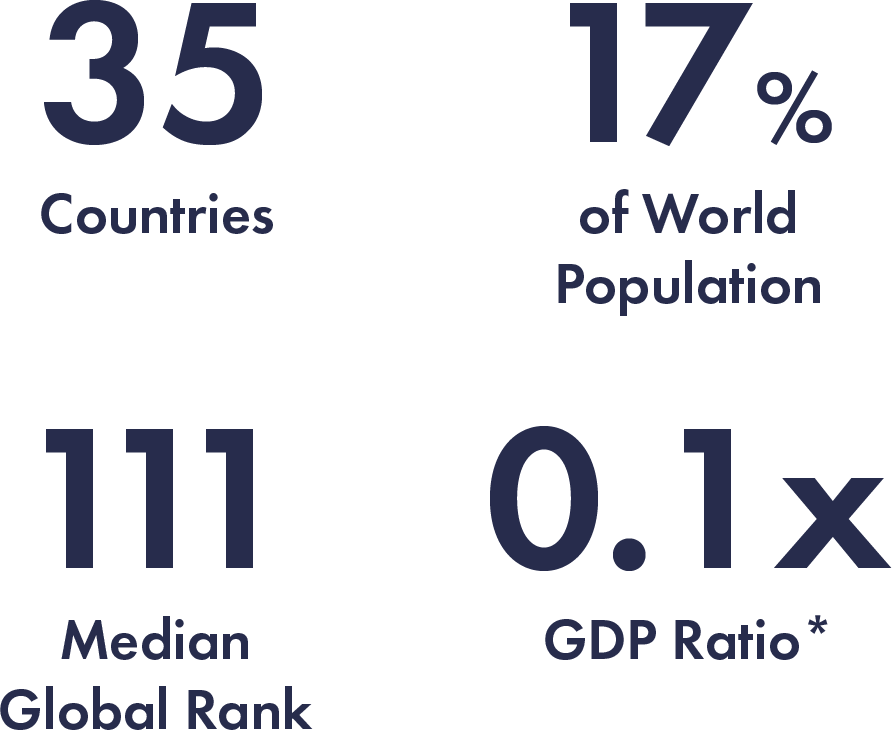
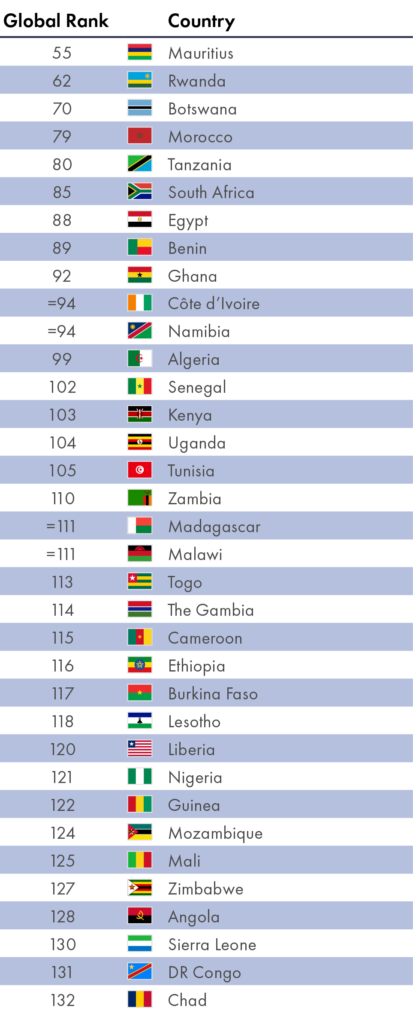
Africa is the world’s second‑most populous continent. The 35 African countries in the CGGI have a combined population of 1.35 billion, accounting for almost 90% of the continent’s inhabitants, and an average per capita GDP of US$ 2,391. Africa was the second‑best performing region in 2026, with 71% of countries improving their overall CGGI scores from 2025, yet it remains the lowest‑performing region in the Index since its launch in 2021. Twenty three of the 35 countries have a CGGI rank below 100, underscoring governance challenges. In 2026, CGGI added seven African countries: Chad, Democratic Republic of the Congo, Gambia, Guinea, Lesotho, Liberia, and Togo.
Africa
Average Pillar Ranks in 2026

Africa
Average Pillar Scores (Year‑on‑Year Change 2021–2026)

From Demographics to Delivery
In the next 50 years, Africa’s population is projected to roughly double to 3 billion.1 Whether that becomes an asset or an added challenge will hinge on governance. By 2050, the continent’s working‑age population—those aged 20–64 years—is expected to double to about 1.6 billion, accounting for a quarter of the global workforce. For governments across the continent, the challenge lies in translating this demographic expansion into sustained economic opportunity by building institutional capability.
Several African economies are projected to grow faster than the global average in the coming years, and the region attracted record levels of foreign direct investment in 2025, according to the UN Trade and Development’s World Investment Report 2025.2
Yet deep structural pressures persist. Extreme poverty has fallen compared with the 1990s, but Africa now accounts for a rising share of the world’s poorest people as population growth outpaces economic progress in some countries.3 One in three Africans still live below the extreme poverty line of US$ 2.15 a day4, and World Bank modelling suggests that by 2030, 80% of the world’s population living in extreme poverty will be in Sub‑Saharan Africa.5
Security and fiscal pressures add further strain: Africa records more state‑based armed conflicts than any other region.6 At the same time, more than half of low‑income African countries are already in, or at high risk of, debt distress7, while climate shocks—from droughts to floods—place additional pressure on state capacity and borrowing costs.8 A central question is whether governments can build durable institutional capacity fast enough to keep pace with all of these pressures.
A Region Under Pressure Shows Promise
These structural pressures are reflected in the Chandler Good Government Index (CGGI). Africa remains the lowest‑scoring region in the Index since it was launched in 2021. The region’s average score sits significantly below the global average, and no African country ranks within the global top 50 in 2026. More than half of the 35 African countries included in the CGGI rank outside the global top 100.
The most recent data, however, points in a more encouraging direction. Between 2025 and 2026, most African countries improved their overall CGGI score, lifting the regional average. The region’s average scores in six of the seven CGGI pillars improved over the past year as well. The largest gains were concentrated in two pillars: Helping People Rise and Financial Stewardship. Together, these suggest that even under tight fiscal conditions, some governments are beginning to stabilise public finances while improving delivery in areas that directly affect citizens, including healthcare, education, and basic public services.
Africa’s representation in the CGGI also expanded this year. Seven of the 13 countries newly added to the Index in 2026 are African—Chad, the Democratic Republic of the Congo, Gambia, Guinea, Lesotho, Liberia, and Togo—broadening the base for tracking the region’s progress over time. Most of these new entrants rank towards the lower end of the global distribution.
Beneath the regional averages, different patterns stand out. Between 2021 and 2026, for instance, nearly every African country improved its score in the Data Capability indicator (Strong Institutions pillar)—an area increasingly central to effective policy design and service delivery—with Morocco recording the largest gains. A similarly broad improvement occurred in the Gender Gap indicator (Helping People Rise or HPR pillar), where Morocco again led the region. Nigeria, meanwhile, recorded the region’s largest score improvement in both the Education (HPR) and International Trade indicators (Global Influence & Reputation). Such advances suggest that even where overall governance capacity remains constrained, targeted improvements are occurring across specific indicators.
Public Sector Reforms are Central to the National Agenda
Mauritius, the top‑ranked African country in the CGGI, improved its overall score in 2026. Lutchmanah Pentiah, Minister of Public Service and Administrative Reforms, reflects on the initiatives sustaining Mauritius’s strengths in government innovation and policy implementation.
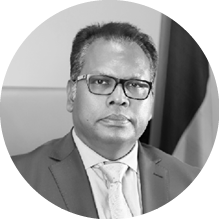
LUTCHMANAH PENTIAH
Minister of Public Service and Administrative Reforms
Sustaining high performance in government innovation and policy implementation requires a blend of effective institutional setup, strategic initiatives, and a culture of continuous improvement all underpinned by the dedication and professionalism of our public officers.
Since the government took office in November 2024, public sector reforms have been placed at the heart of the national agenda. To ensure that innovation and effective implementation are embedded in the public service, dedicated Reforms and Innovation Units, each headed by a Director of Reforms, have been established across ministries and departments. These units coordinate initiatives, identify operational bottlenecks, and support teams in translating policies into measurable outcomes, ensuring that reforms are structured, accountable, and results oriented.
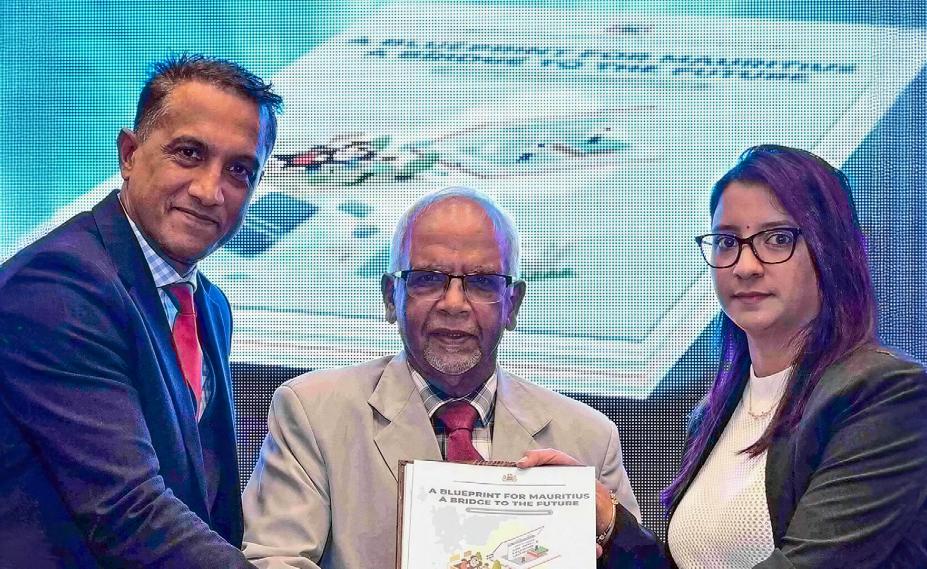
To complement these efforts, the government launched the Digital Transformation Blueprint last year, which enables a whole‑of‑government approach, fostering integrated service delivery, data‑driven decision‑making, and improved coordination across ministries.
In March 2025, during the state visit of Prime Minister Narendra Modi of India, the state‑of‑the‑art Atal Bihari Vajpayee Institute of Public Service and Innovation was inaugurated. The Institute provides a centre for continuous learning, leadership development, and promotion of innovative practices, strengthening the capacity of our public service to implement policies effectively.
A cornerstone of our reform agenda is the forthcoming Public Sector Reforms Bill, which will institutionalise modern management practices, strengthen accountability, and ensure reforms are pervasive, sustainable, and capable of delivering tangible results for citizens. Central to effective implementation is good governance. In this context, the government is establishing a new Financial Crime Agency with enhanced investigative and enforcement powers to safeguard public interests, ensure independent and efficient functioning of local institutions, and reinforce the government’s commitment to uphold the rule of law.
While we take good note of our achievements, we view them as a motivation to continue improving. For countries of the Global South, South–South cooperation remains essential for building strong, efficient, resilient, and responsive governments. In an era increasingly shaped by digital transformation and Artificial Intelligence, collaboration, innovation, and structured implementation remain the pillars that enable Mauritius to sustain its high performance in citizen‑centric delivery and policy delivery.
We are convinced that Mauritius will continue to benchmark itself against global best practices while staying anchored in the values that have underpinned our development. We are committed to creating a modern public service that is agile, efficient, transparent, accountable, resilient, and people centric. We are all striving towards meeting that goal.
Long‑Term Planning Requires Institutional Discipline, Not Just Political Will
Rwanda ranked in the global top 20 in the Leadership & Foresight pillar for five out of the last six years. Dr Doris Uwicyeza Picard, CEO of the Rwanda Governance Board, explains what sustains that focus when fiscal space is constrained and priorities compete.

DR DORIS UWICYEZA PICARD
CEO of the Rwanda Governance Board
Rwanda’s ability to sustain a long‑term development focus following the 1994 Genocide against the Tutsi is a striking governance transformation. Emerging from total institutional and social collapse, the nation designed a culture centred on citizen choice, discipline, and future orientation. This culture, rooted in the inclusive Urugwiro dialogue, elevated long‑term planning from a technical exercise to a firm political commitment.
In a context of constrained fiscal space, frameworks such as Vision 2050 and the National Strategy for Transformation (NST) function as essential guardrails. These frameworks establish a hierarchy of priorities that allow for strategic resequencing. When resources are limited, this hierarchy ensures the government can distinguish between immediate consumption and foundational investments, protecting high‑impact sectors such as digital infrastructure by deferring non‑essential administrative costs.
Cross‑government coordination is a standing feature, not an ad hoc response. Public institutions operate within a shared national logic, emphasising measurable outcomes rather than short‑term wins. This is increasingly underpinned by integrated data systems that provide a “single version of the truth” across ministries, preventing duplication, a luxury our constrained budget cannot afford.
The Imihigo performance contracts9 institutionalise a culture of public accountability. Beyond accountability, Imihigo serves as an efficiency tool; by incentivising local leaders to find innovative, low‑cost ways to meet national targets, the government in effect crowdsources development solutions. This reduces the top‑down fiscal burden and ensures development remains a collective social project.

Home‑grown solutions such as Umuganda and Abunzi mediation committees strengthen trust between citizens and the state. Because policies are perceived as a shared rebuilding effort, the government maintains the social legitimacy required to sustain long‑term strategies during periods of fiscal strain.
Underlying these systems is a consistent leadership narrative that frames development as a generational project requiring patience, coherence, and self‑reliance. Rwanda’s journey illustrates how visionary leadership, institutional discipline, and culturally grounded solutions converge to protect a development strategy across time, regardless of the fiscal climate.
Ghana
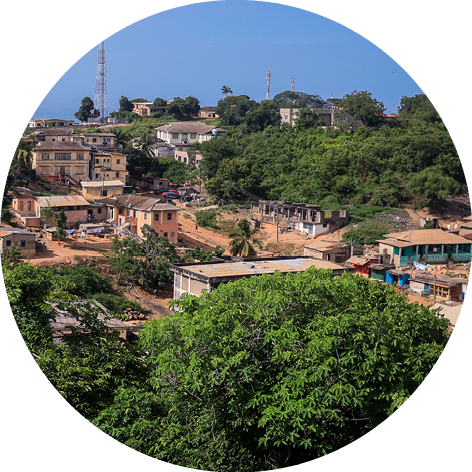
Ghana’s overall CGGI score improved year‑on‑year in 2026, led by strong gains in Financial Stewardship on the back of score increases in the Government Debt, Country Budget Surplus, and Country Risk Premium indicators. Ghana’s 2022 sovereign debt default triggered a major macroeconomic adjustment programme. In May 2023, Ghana entered a US$ 3 billion IMF Extended Credit Facility, which has served as an anchor for fiscal consolidation and structural reforms.10 Progress has been made on debt restructuring, including agreements with official creditors and ongoing negotiations with external bondholders.11 IMF‑supported projections suggest that, contingent on full implementation of reforms and creditor participation, public debt could decline to around 56%–60% of GDP by 2025. While programme performance has generally been satisfactory, it has faced setbacks, including fiscal slippages in 2024, and reforms remain ongoing.12, 13

Egypt
Between 2021 and 2026, Egypt improved in three of the seven CGGI pillars, with the largest gains in Attractive Marketplace. The period coincided with a broad reform programme. President Abdel Fattah el‑Sisi’s Vision 2030, for instance,14 featured administrative reforms to modernise bureaucracy through digital tools. The 2025 National Narrative for Economic Development15 introduced more than 500 reforms spanning flexible exchange rates, tax incentives, and expanded industrial zones to boost foreign direct investment16 and private‑sector growth.17

Zambia
In 2025, Zambia restructured more than 90% of its external debt through IMF‑supported negotiations,18 a development that speaks directly to one of the country’s most acute governance pressures. As the UN noted, Zambia’s 2026 National Budget allocates as much to debt repayment as to essential services, a constraint that frames policy choices.19 Against that backdrop, Zambia’s long‑term CGGI trajectory is notable: it improved its scores in five of seven pillars between 2021 and 2026, with biggest gains coming in the Strong Institutions and Financial Stewardship pillars.

Malawi
Malawi presents one of the Index’s more instructive contrasts. Its overall CGGI score recorded the second‑biggest decline in Africa since 2021, yet Malawi improved in the Robust Laws & Policies and Leadership & Foresight pillars. In 2023, the National Planning Commission unveiled a 40‑year blueprint targeting upper‑middle‑income status by 2063, anchored on agriculture, industry, urbanisation, and human capital.20 Malawi also advanced anti‑corruption efforts through its 2023–2025 Open Government Partnership Action Plan, amending procurement and ombudsman legislation, enacting beneficial ownership transparency laws, and establishing an Independent Commission Against Corruption.21

Mauritius
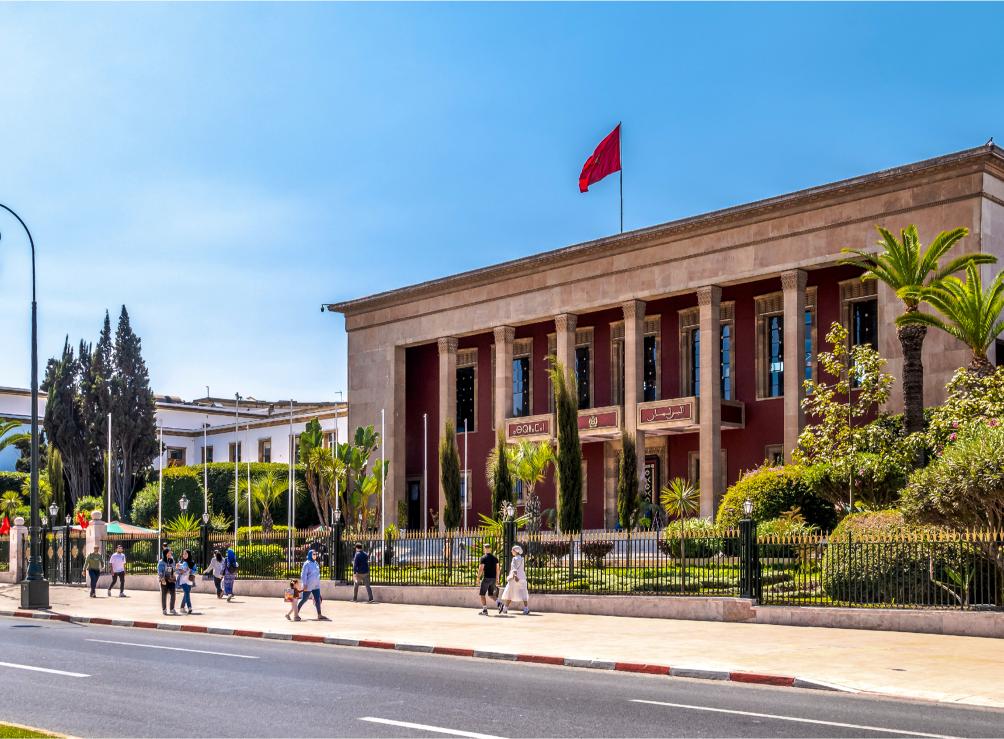
Mauritius remains Africa’s highest‑ranked country in the CGGI. Its overall score improved in 2026 supported by gains in four pillars: Strong Institutions, Financial Stewardship, Attractive Marketplace, and Helping People Rise. Since taking office in late 2024, Mauritius’s coalition government has initiated reforms to improve policy implementation and initiated digital transformation to enhance the delivery of public services, enable data‑driven decision‑making, and better inter‑ministerial coordination. The Finance Minister’s 2025–2026 budget speech emphasised policies to reform the healthcare system and promoted investment via public‑private partnerships for infrastructure, incentives for renewables and fintech, and measures to unlock growth in AI and high‑tech sectors.22
Endnotes